If you’ve ever had a logo turn blurry or pixelated when printed large, on a banner, a sign, or a shirt, chances are the file you were working with wasn’t a vector file. Understanding what a vector logo actually is, and why it matters, can save a business real time and money down the track.
What “Vector” Actually Means
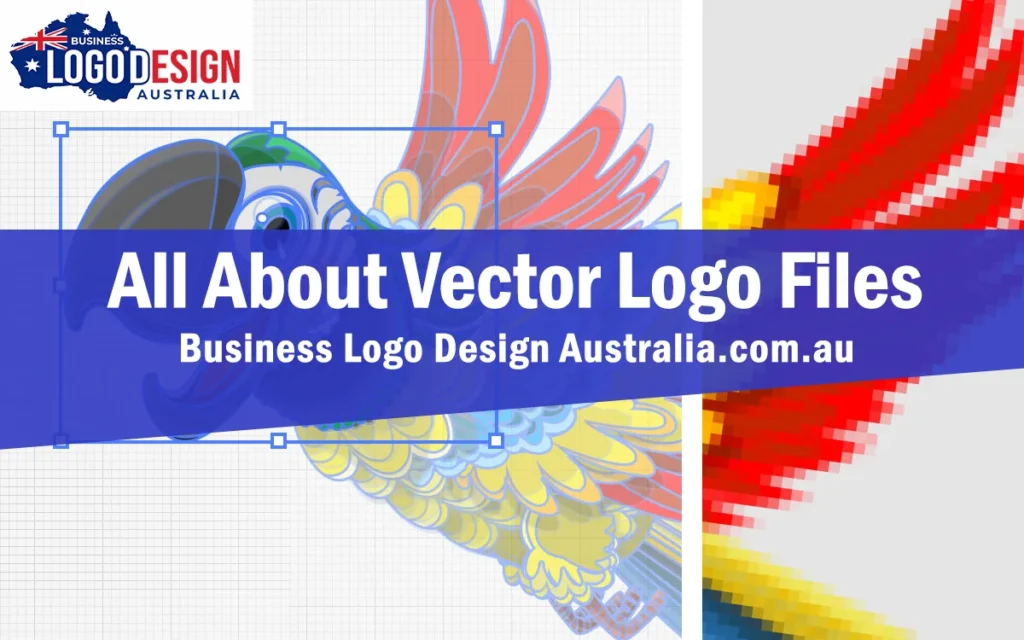
A vector file builds an image out of mathematical points, lines and curves rather than a fixed grid of coloured pixels. Because the shapes are described mathematically rather than as a fixed image, a vector logo can be scaled up to any size, a business card or a building sign, without losing sharpness or clarity.
This is different to a raster file, like a standard JPEG or PNG, which is built from a fixed grid of pixels. Scale a raster image up too far and it becomes visibly blurry or blocky, since there’s a limit to how much detail was ever actually captured in the file.
Common Vector File Formats
AI (Adobe Illustrator) and EPS files are the standard master vector formats used by designers and printers. These aren’t files most business owners will open themselves, but they’re essential to have on hand, since printers, sign writers and future designers will typically ask for one of these formats specifically.
SVG files are also vector based, but built specifically for use on the web. They display sharply at any screen size without adding much file weight, making them ideal for website logos and icons that need to stay crisp on high resolution screens.
PDF files can also contain vector artwork, and are sometimes provided as a more universally accessible way to share a vector logo, since PDF files can be opened without specialist design software.
Why a Vector File Matters More Than Most Businesses Realise
Plenty of businesses only discover they need a vector file when they’re already partway through a project, ordering large format signage, printing merchandise, or briefing a new marketing agency, and a printer or supplier asks for one specifically. Without it, a logo may need to be recreated from scratch, an unnecessary cost that a complete original logo delivery should have avoided entirely.
When You Genuinely Need a Vector File
Any time your logo needs to be reproduced at a large size, building signage, vehicle wraps, banners, trade show displays, you need a vector file. Most standard printing for business cards, brochures and smaller signage also works best from vector artwork, since it guarantees sharp results regardless of the final print size.
Making Sure You Actually Have One
If you’ve had a logo designed previously and aren’t sure whether you have a vector version, check whether you have a file ending in .ai, .eps, or a PDF explicitly noted as containing vector artwork. If all you have is a JPEG or PNG, it’s worth asking your original designer whether a vector version exists, or getting your logo redrawn as vector artwork if the original files have been lost.
About Business Logo Design Australia
Business Logo Design Australia designs custom logos for businesses across the country, from new startups to established businesses going through a rebrand. Every project starts with a real conversation about your business, followed by original concepts, a set number of revisions, and a complete set of final files ready for web, print, signage and everyday use. Pricing is laid out clearly before you commit to a package, so you always know what’s included.
Related Reading
- Should My Logo Include My Business Name?
- Restaurant and Cafe Logo Design
- Logo Design for Real Estate Agencies
Get a Complete Set of Vector Files
Business Logo Design Australia delivers proper vector files with every logo project, so you’re never stuck without the right format when a printer asks for one.